Announcing the Selected Teams for the Podonos Research Support Program

We had an opportunity to meet researchers from a wide range of institutions and organizations working on speech and audio technologies. We were grateful for the strong interest in the Podonos Research Support Program and for the thoughtful conversations shared at our booth.

After carefully reviewing all the numerous applications, research focus areas, and proposed use cases, we are excited to announce the teams selected for this program.


Selected Institutions and Organizations

The following teams have been selected to receive support through the Podonos Research Support Program:

(Institutions are listed in no particular order.)


About the Research Support Program

The Podonos Research Support Program is designed to help research teams run reproducible, high-quality subjective speech evaluations at scale. Selected teams receive $1,000 of Podonos credits to support their ongoing or upcoming research, with additional support available for teams that publicly share their evaluation methodology and results.

Through this program, we aim to encourage the speech research community toward transparent and reliable performance evaluations.


Looking Ahead

We are excited to support these teams and look forward to seeing how Podonos is used in their research workflows, publications, and open-source projects.

To everyone who applied or stopped by to talk with us at ASRU 2025, thank you. We plan to continue expanding this program and collaborating closely with the research community.

Stay tuned for future updates and research highlights from the Podonos Research Support Program.


Podonos Team
Other readings

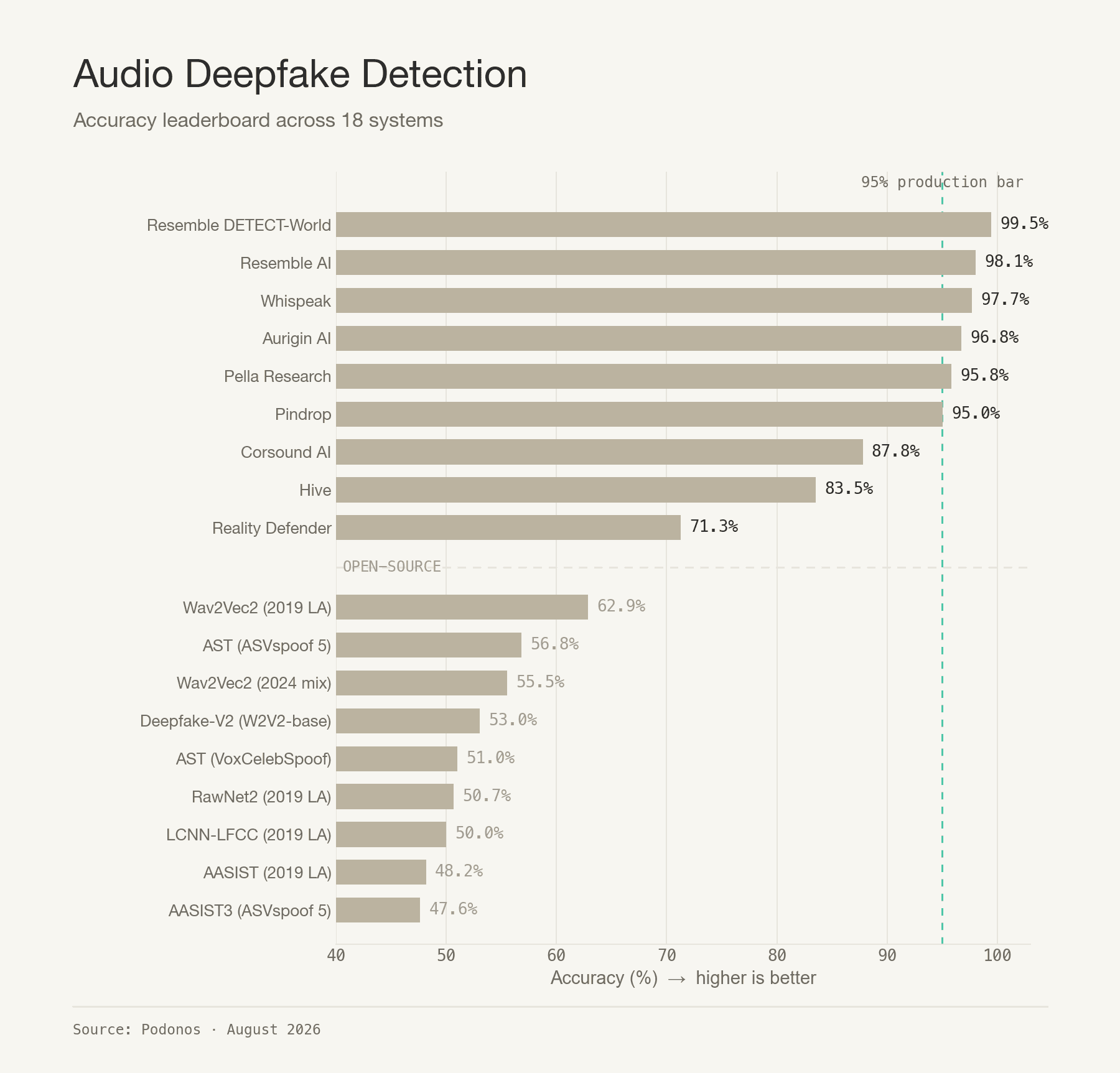
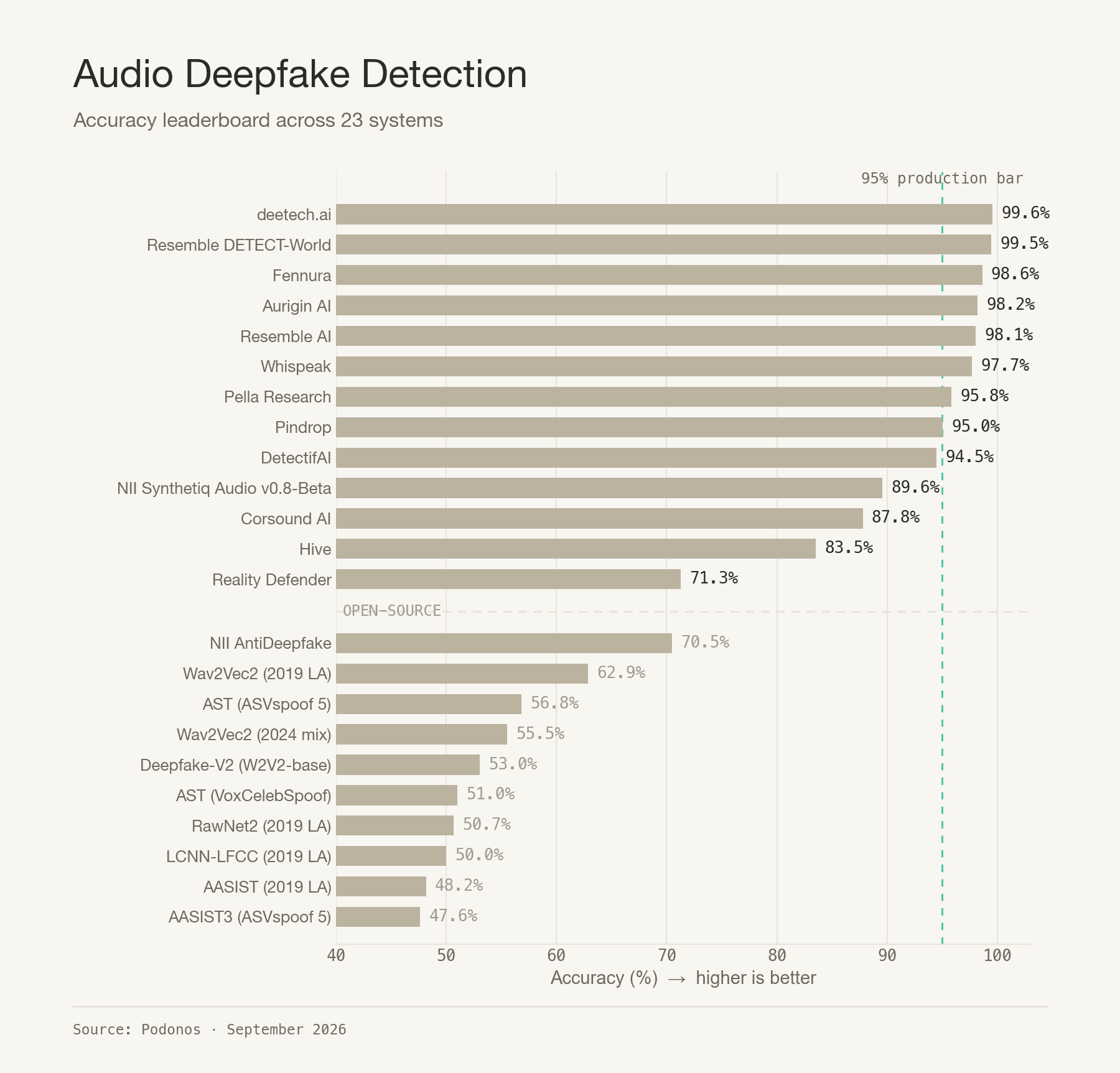
Audio deepfake detection benchmark: deetech.ai takes the top spot

Five new systems later, our audio deepfake detection benchmark has grown to 23 entries, and eight systems now clear 95% accuracy.

|11 min read

Audio deepfake detection benchmark: an open model finally clears the production bar

When we last published this benchmark, four commercial systems sat above 95% accuracy and none of nine downloadable open-source models scored above 63%.

|10 min read

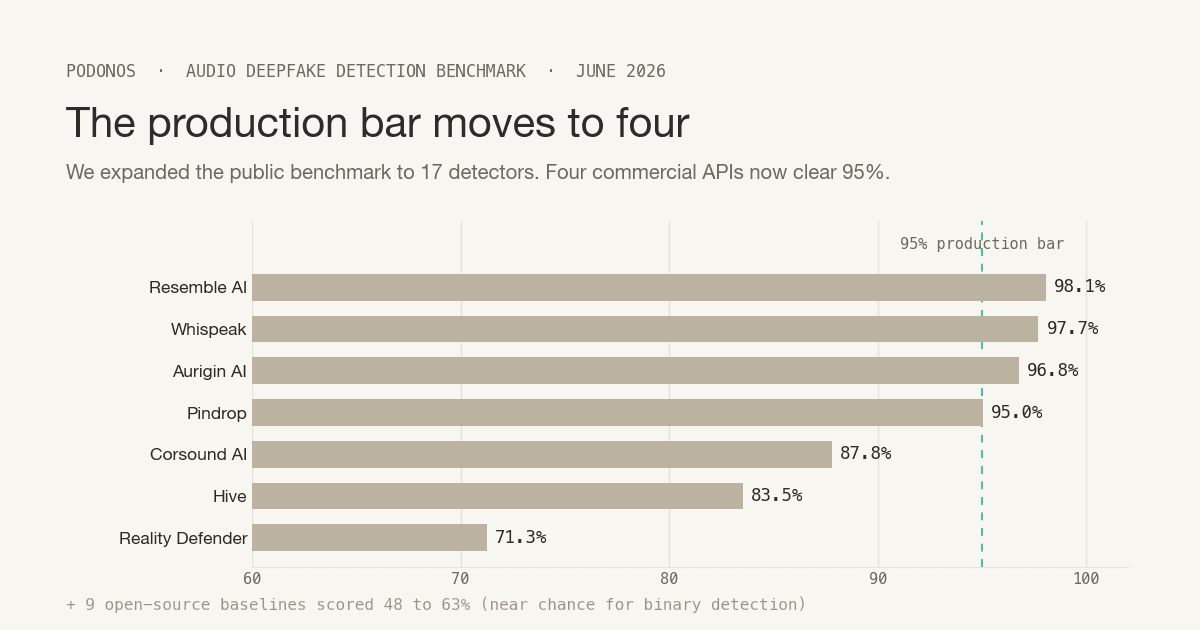
Audio Deepfake Detection Benchmark: the production bar moves to four

Nine new systems later, the top of our audio deepfake detection benchmark is crowded, the open-source gap is wider than ever, and speed sets systems apart.

|7 min read

Natural ≠ Preferred: What Our TTS Rankings Revealed About How Humans Actually Judge AI Voices

Naturalness and preference diverge: our US English TTS benchmark ranked Deepgram Aura 2 #1 for naturalness and Rime Arcana v3 #1 for preference.

|7 min read

Automatic Deepfake Audio Detection Benchmark

Every audio deepfake vendor reports accuracy around 99%, but none of those numbers are comparable: each comes from a test set the vendor controls.

|7 min read

Benchmarking Chatterbox Turbo: How Resemble AI Evaluated Open-Source Voice AI with Podonos

Resemble AI's open-source Chatterbox showed open TTS models are viable alternatives to proprietary systems. Chatterbox Turbo takes that a step further.

|5 min read

Introducing Podonos Flash

Human evaluation gives voice AI teams the best insight but takes time, and fast AI evaluators often miss human perception. Podonos Flash changes that.

|4 min read

Podonos just raised $2.4M in pre-seed funding

Podonos has raised $2.4M in pre-seed funding to tackle voice AI evaluation, led by Serac Ventures with participation from Naver D2SF and KAIST Ventures.

|3 min read

Product Update: Podonos Wizard launch

The Wizard feature has launched. It guides you through designing an evaluation, blazing fast, with no audio files or script development needed.

|2 min read

Why Post-Refining Matters in Voice AI: Making Sense of Raw Evaluation Data

With automation, teams can generate thousands of audio samples and collect as many human evaluations. The real challenge: what to do with all that data?

|2 min read

Ready to unlockthe potential ofyour Voice AI Model?

Improve your model with trust